The question I keep getting asked
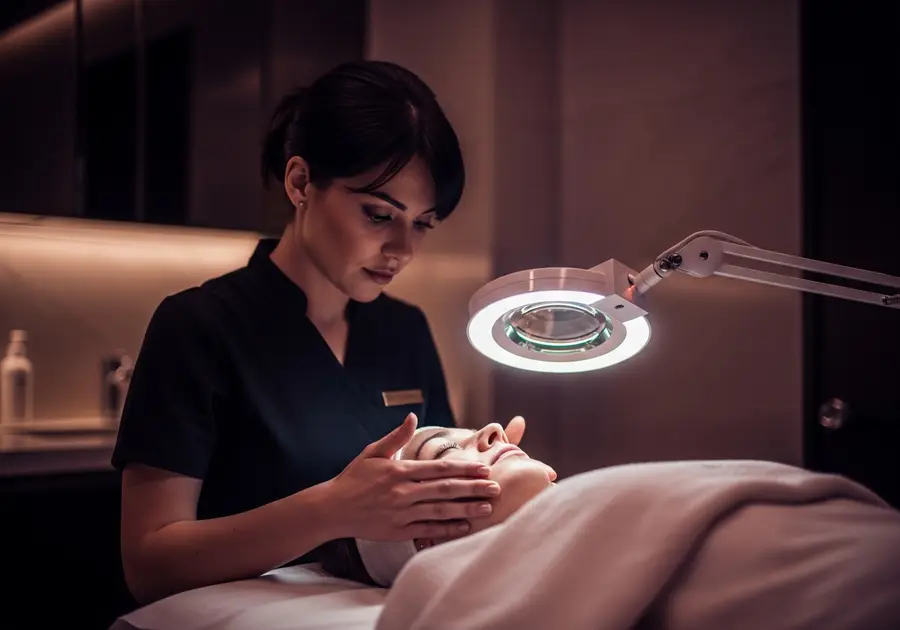
More than once this week a client settled into the chair, saw the LED panel swing over, and asked some version of the same thing: How does this actually work? Is it really doing anything? And can I overdo it? Fair questions, all three. Here is the honest answer, without the marketing gloss.
Where LED light therapy came from
LED light therapy did not start in a spa. NASA developed and used it to help astronauts with pain management and wound healing in space, where the body does not heal the way it does on the ground. Because it worked, it moved into medical and esthetic practice as a recognized treatment. So when you hear LED, you are not hearing a gimmick. You are hearing something with a real research history behind it.
The short version of the science: specific wavelengths of light reach the skin at different depths and prompt cells to do more of what they already do. Certain wavelengths support the skin as it calms inflammation and repairs itself. It is not heat, it is not a laser, and it does not hurt. You lie there with your eyes covered and let it work.
Is it really effective?
Yes, with two honest qualifiers.
First, LED is not a one-and-done miracle. It is a supporting player. In my treatment room it follows extractions and precedes the mask, because the skin is most receptive right then. It does real work, but it works best as part of a sequence, not as a magic wand you wave once.
Second, effectiveness depends heavily on dose and time. This is the part the ads never mention. The wavelength matters, the strength of the device matters, and the number of minutes under the light matters. That is exactly why my Age Regenerative facial builds in a proper block of LED rather than a token thirty seconds. Time under the light is not filler. It is the mechanism.
Can you overuse it?
This is the question I respect the most, because it usually comes from someone who bought an at-home device and is trying to be responsible with it.
At-home LED products are convenient and less expensive, and I am not going to pretend they are all worthless. But they are not all created equal, and the time you use them for is vital to both effectiveness and safety. A weak device used too briefly does very little. A stronger device used far longer than intended, chasing faster results, is where people get into trouble. More is not better. Correct is better.
If you own an at-home mask, the smartest thing you can do is bring it to your appointment. I would rather look at what you actually have and tell you how to use it well than have you guess from a video.
Where LED fits in a real treatment
Here is how I use it, so you can picture it. After cleansing, gommage, an enzyme under steam and extractions, the skin is prepped and receptive. That is when the LED goes on, for a proper stretch, followed by facial massage and a firming mask. Each step sets up the next. The LED is not doing all the work, but the work is measurably different because it is in the sequence.
That is the whole philosophy here, honestly. No single step is a miracle. The result is built by doing the right things in the right order, at the treatment table and at home, over a four week rhythm.
If you want to try it
The new Age Regenerative facial is the easiest way to experience a full course of LED the way it is meant to be used, and it pairs beautifully with dermaplaning if you want to add it. You can see the menu and book at simplyfacesskincare.com or through the Simply Faces booking page. If you are not sure it is right for your skin, that is what the consultation is for.
And if you already own an at-home device, bring it. We will make sure you are using it in a way that helps you rather than one that quietly works against you.
Experience LED the way it is meant to be used
The new Age Regenerative facial builds in a proper block of LED, right where your skin is most receptive. See the menu and book online, and bring your at-home device if you have one.